Identifying & Fostering a Healthy Work Environment

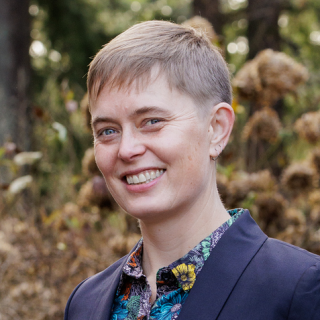


This session was a little different from past Career Stories. Rather than tracing a career path from A to B, we focused on something harder to name but easy to feel: what makes a workplace genuinely healthy — and what can each of us actually do about it?
Introductions
Meet the Speakers
Before diving into the questions, each speaker introduced themselves and shared their most memorable early job — a reminder that careers rarely follow a straight line.
- Brittany worked at the Pentagon in high school, then immediately after college decided she wanted the opposite of an office job — which led her to knocking on strangers’ doors in North Carolina selling window replacements. “If you can get literal doors slammed in your face, you can kind of handle people hanging up or not responding to your messages.” Today she works on enterprise accounts, finding hidden pipeline in existing customer relationships.
- Kristin spent parts of four college summers at a biological research station in southeastern Arizona — part of the janitorial, kitchen, and grounds crew by day, running field research on lizards, snakes, bats, and birds whenever she wasn’t prepping salad for 75 people. Now she manages Posit Academy alongside the broader Customer and Partner Education Team (CAPE).
Amy started coaching gymnastics at 15. As Chief People Officer, her work today centers on helping every Positer do great, engaging work — building better teams, growing careers, and creating lifelong champions of Posit.
Question 1
How do you define a “healthy” work environment — and what green flags do you look for?
- Amy · The Four P’s
- Kristin · Feedback in all directions
- Brittany · Individuality & candor
Amy offered a memorable personal barometer: she measures her day in laughter. “When we are laughing with each other, that usually means healthy.” Beyond that, she organizes her thinking around the four P’s: Purpose, Play, Progress, and Pay.
“Purpose, play, progress, and pay — and measuring my day in laughter.”

Kristin pointed to communication and feedback as her litmus tests — specifically, whether feedback flows in all directions. Humor, transparency, and whether people are honoring real boundaries rounded out her checklist.
Brittany added two markers: first, how individuality is treated — a company that gives people space to show up as themselves is a green flag. Second, leadership transparency. “When leaders lead with candor and honesty, employees feel respected and loyal, even if they don’t always agree with everything being done.”
Question 2
Have you ever worked in an unhealthy environment? What helped you navigate it?
- Kristin · Don’t be the lone hero
- Amy · Control what you can
- Brittany · Sanity & health trump all
Kristin told the story of 2009, when she was working in the nonprofit sector during the economic crash. Her organization lost a third of its staff, and she took on an enormous load — pulling off a successful fundraiser, overhauling donor mailings, getting lapsed donors back on the books. She worked her tail off. And then she was fired. The reason cited: she was miserable to be around.
“When things get hard, avoid any impulse to be the hero in the room. Connect with people around you — your manager, your teammates. Figure out how not to do it alone.”
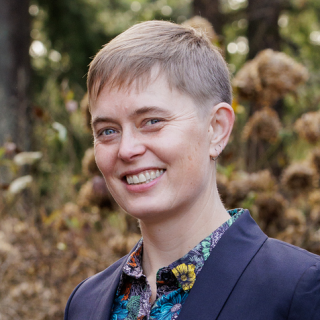
Amy described a stretch at a company where the workload kept growing, but there was always a bonus or a thank-you to keep her hanging on. The only thing she could control was the environment she created for her own team. In one memorable moment, she and a few colleagues took their conference agendas outside, put them in a trash can, and lit them on fire. “We did it, it sucked, we acknowledged it — and then we moved on.”
Brittany kept it simple: “Sanity and health trump everything.” She described learning to pay attention to physical and emotional signals — mood low even on weekends, feeling like less of yourself — as the sign that something has to change. Amy added that sometimes the people closest to us can see those cues before we do, which is why checking in with each other matters so much.
Question 3
Can you share a time you noticed morale slipping — and what you did?
- Brittany · Talking the team off the ledge
- Kristin · 10 seconds, then forward
Brittany described her first tech sales job, where she’d landed in what felt like the dream team. Then, a week after an off-site in Greece where she and a colleague raved to the CEO about how great their manager was, he was fired. The team was devastated and beginning to turn on the incoming replacement. Brittany pulled them together: “He didn’t do anything wrong — he’s literally just accepting a role he was offered. Let’s give him a fair shot.”
Kristin pointed to the 2023 layoffs at Posit, which hit the Academy team hard. Her approach: give people a container for their feelings, then shift to problem-solving. “You get 10 seconds to have all your feelings — scream, rage, throw your teddy bear — and then we figure out how to move forward.”
Question 4
What small daily actions make the workplace more inclusive and supportive?
- Brittany · Pay close attention
- Kristin · Just be a thoughtful human
- Amy · Listen when it matters
Brittany reframed allyship right away: it isn’t a weighty title or a formula — it’s small actions that show someone you’re there for them. Noticing when someone mentions a loss in Slack and reaching out privately. Remembering that a colleague’s daughter started kindergarten and following up a month later. “People are sometimes shocked that I remember things they said in passing. But that’s how I try to show up.”
"Allyship is just about supporting humans. Showing up for your coworkers as a standard, thoughtful human — congratulations, you’re doing allyship."
Kristin pushed back on the idea that allyship requires a special framework. There’s no one formula for supporting someone, because there’s no one set of needs that comes with being any particular kind of person. Just be a thoughtful human.
Amy agreed, adding that truly listening — especially in the moments when someone needs it — is “harder than it sounds in very full lives.” Those moments of real presence are exactly what build the foundation of a team people want to be part of.
Question 5
What practical ways have you advocated for your own boundaries and work-life balance?
- Kristin · Find the why; harm reduction
- Amy · Small recharges beat big commitments
- Brittany · Unlearning old habits
Kristin tied this question directly back to her 2009 story. Her advice: first, figure out the why behind the pattern. Is it too many competing priorities? Anxiety? A long-standing habit of giving 120%? Once you name the root, you can find the right fix. For her, the most effective tool has been creating external accountability — in her current case, training for a 50K race. She also introduced a concept from her social worker sister: harm reduction. Rather than treating a relapse into old habits as total failure, celebrate incremental progress.
“You made it two days without checking LinkedIn at midnight — that’s amazing. That’s better than last week. Celebrate the movement toward your goal, not just the days you slip.”
Amy shared something more personal: she took months off between her last role and joining Posit expecting the anxiety to disappear. It didn’t. “It wasn’t really about the environment — it was about me.” What she’s learned: sustainable boundaries come from small recharges throughout the day — five deep breaths between meetings, a few minutes outside, reconnecting with her why. She also recommended telling others about your boundaries — being seen makes them easier to hold.
Brittany was refreshingly candid: “This question kind of highlighted that maybe I don’t have super firm work boundaries.” Sales never fully stops in her mind. But she’s actively unlearning the hypervigilance from previous jobs — and leaning on her dogs, who keep her on a schedule regardless. “I’m just a work in progress on this one.” Amy: “We all are. It’s a practice.”
Question 6
What behaviors do you practice to ensure colleagues feel psychologically safe sharing ideas?
- Amy · Call people in, not out
- Brittany · Lead by example
- Kristin · Curiosity + best intent
Amy framed psychological safety as something built in small, intentional moments — particularly the first time someone on your team makes a mistake. How you respond sends a powerful signal. She advocates for “calling people in” to the conversation rather than calling them out. And reminded us that psych safety isn’t only the leader’s job — each of us can work on the conditions we create for ourselves too.
Brittany reflected on learning the difference between calling in and calling out the hard way. Asking someone publicly “What do you think?” without warning is a spotlight, not an invitation. She’s shifted to checking in privately first — a quick Slack message during a meeting, letting someone know she’ll back them up if they want to speak.
“When we show up as ourselves, it encourages other people to do the same. Maybe it takes two meetings. Maybe five. But it’s not up to us to determine how long it takes for someone else.”

Kristin took a philosophical angle. Since joining Posit four-plus years ago, the two principles that have changed her most as a manager are curiosity and assuming best intent.
Bonus Question
What advice would you give someone who wants to contribute to a positive culture but feels too junior to make a difference?
- Brittany · The answer is the question
- Amy · Small moments, every day
Brittany , as the most junior speaker in the room, made this one personal. Her answer: the answer is the question. You contribute to a positive culture by contributing. Don’t wait for permission, seniority, or the right title. “I don’t care if you just joined the company today — you have an opinion, a perspective, life experiences nobody else here has lived. Hierarchy doesn’t matter when we’re talking about human issues.”
She closed with a quote that has stayed with her: No snowflake in an avalanche ever feels responsible. The point works both ways — every small negative act adds up, and every positive voice, however small, is part of what moves the whole.
“An avalanche is all of these snowflakes, and they all matter. Everybody’s voice adds a different note — if we’re thinking of it as a song, every part counts.”
Amy echoed the same truth: influence lives in the small moments with the people you’re with every day, not in titles or org charts. “Each one of us has the ability to positively or negatively affect that for somebody else.”
Final Question
Can you identify a turning point — a specific action from a manager or peer that changed your work life?
- Amy · Planting seeds
- Kristin · Two questions that changed everything
- Brittany · Rooms she didn’t expect
Amy described people throughout her career who kept planting seeds — forwarding a job listing, saying “you’d be really good at this,” showing her a version of herself she hadn’t yet imagined. For years she said she’d never be a Chief People Officer. But those seeds, planted by more than one person over time, eventually let her see what she was capable of. She now carries that practice forward: What seeds can I plant for someone else?
Kristin reflected on a manager whose one-on-one style was transformative: two questions, every time — Do you have what you need? And how can I help? No check-ins on task lists, no implicit pressure to prove productivity. Just fundamental trust.
"There was a fundamental trust that her staff were excellent, and her job as manager was to support them. That changed the way I manage people to this day.”
Brittany went back to her Pentagon days, where a deputy director gave her stretch assignments — including a briefing she presented directly to a Brigadier General. “When people put you in spaces you otherwise felt you had no business being in, it gives you a level of confidence that’s really hard to describe. That set the stage for how I show up today — unafraid to speak to anyone, at any level, at any time.”
Thank you to Amy, Kristin, and Brittany for showing up with such honesty and generosity. As Chris put it at the close: “There’s no other place I’ve worked where I’ve been willing to be this vulnerable — and that is because of the culture we’ve all built here together.”
We are the avalanche and the snowflake, all in one.
Written and facilitated by Christopher Castillo.

Amy Rossi

Kristin Bott
