From Black to Glass Box: Rethinking the Actuarial Lifecycle


In the actuarial world, ‘revisiting last year’s analysis’ is usually the start of a long, caffeinated weekend. You’re handed a legacy model that produced results twelve months ago, but the original environment is gone, the dependencies are a mess, and the logic is undocumented.
Yikes, I know. Typically, the goal is to just make the code run, but with Positron, the goal is to make the work durable and reproducible.
More than an IDE: An Actuarial Ecosystem
Positron isn't just a place to type code; it’s a structural support system for your analysis. It provides faster iteration cycles and built-in documentation, but its real power lies in the governance woven directly into the workflow.
When you need to revisit an analysis with updated assumptions, you shouldn't have to spend your first day troubleshooting whether the environment still works. Positron handles the underlying structure, both governance and reproducibility, so you can stay focused on the actual business problem: the math, the modeling, and the risk.
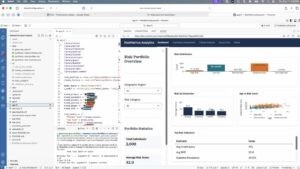
Meet your new BFF: Actuarial Analysis Partner
Once the legacy code is running, the real work begins; understanding what has changed in the data over the last year. This is where we shift from traditional discovery to AI-augmented exploration with Databot.
So, what really is Databot? Databot is Posit’s AI‑powered analyst that works with you to profile your dataset and highlights patterns, anomalies, and shifts in the data. It speeds up the early exploratory work so you can focus on interpretation, modeling, and the decisions that follow. Instead of worrying about whether the environment still works, we can stay focused on the business problem.
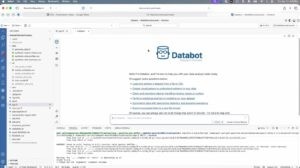
Now, I know what you’re probably thinking: You’ve heard AI is inaccurate, it’s a little intimidating, it takes a ton of expertise, and sometimes it just makes things up. And honestly? You’re right—if you use it the wrong way.
Transparency at Every Step
I want to show you why we are different, and why our approach actually works in the real world. The key idea is this: when we ask questions, we’re not looking for AI to spit out an answer. We’re using it to help us write code that derives the answer. And when you shift the role of AI from “answer machine” to “analysis partner,” everything changes. Accuracy goes up, transparency goes up. And suddenly these tools become genuinely useful, helping you turn days of work into hours.
When I ask Databot to “load and explore the datasets from my directory,” it doesn’t just hand me a summary. It shows me the exact code it generated to do the work. That transparency removes the ambiguity people often associate with AI. I can review the logic, adjust anything I want, and run the code locally in my own environment, never inside the AI platform itself, with complete confidence.
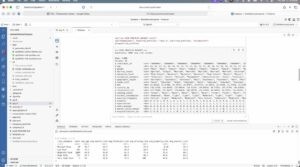
Databot quickly surfaces the shape of the data. We can immediately see where values are missing, where distributions have shifted, and where anomalies stand out. This kind of exploratory work usually takes hours, but here it’s automated, transparent, and fully reproducible.
Databot is both writing the code to take action, making the work transparently reusable, but also giving you summarized results. It’s a bit like having a junior analyst who never sleeps, flagging issues before they turn into problems. For actuaries, that means less time on exploratory grunt work and more time on interpretation, modeling, and decision‑making.
It’s not replacing expertise — it’s amplifying it.
Investigating the “Why”
During the initial analysis, Databot automatically flags an anomaly, a cluster of unusually consistent $100 claims. Instead of manually digging through rows of data, I can simply ask: “Investigate the $100 claim pattern. Are these processing fees, deductibles, or data artifacts?” That gives me a clear starting point to explore what’s really going on.
As Databot generates the code to analyze the prompt, we gain ‘fresh eyes’ on the data. We aren’t guessing what changed, we’re seeing it directly. New patterns in claims, updated distributions in risk factors, and potential outliers are flagged for review. That clarity gives us confidence to move into the final stage: Positron Assistant.

Future-Proofing with Positron Assistant
With our insights in hand, the Positron Assistant helps us document, enhance, and modernize the legacy code. We’re not just making it functional; we’re making it future-proof.
For actuaries, confidence in the numbers is key because every assumption and calculation is documented and must be reproducible. For managers, it means traceability and governance, a results they can stand behind. For organizations, it means alignment between technical teams and business stakeholders, with everyone working from the same source of truth.
Posit’s platform doesn’t just speed things up; it raises the bar for trustworthiness and transparency across the actuarial lifecycle. We aren’t just building models; we’re building a “Glass Box” of transparent, auditable excellence. A system where the humans doing the work stay firmly in the driver’s seat, with full visibility into every step Positron takes and the authority to override, refine, or reject any output.
So what?
In the end, this isn’t about replacing actuarial judgment or reinventing the craft. It’s about giving data lovers the kind of environment they’ve always deserved: one where models are reproducible, assumptions are transparent, and every analytical step is traceable. With Positron, Databot, and the Positron Assistant working together, the work becomes faster, clearer, and far more durable. The machines may accelerate the process, but the expertise, the interpretation, the decisions, and the accountability remains exactly where it belongs: with the humans who understand the risk. That’s how we future‑proof actuarial science, one transparent workflow at a time.
Interested in learning more on this topic? Join us at our upcoming demo on May 12th! Register here.

Matt Wallace
Related Content

Score a Disease Surveillance Model Inside Snowflake, Without Moving

Governed AI for Public Health: Reading Free-Text Records with Snowflak...
