The Prolific Output of Wes McKinney in the Age of Agentic Engineering


Wes McKinney is best known as the creator of pandas, the Python library that transformed data analysis. He’s also behind Apache Arrow and Ibis, and has written Python for Data Analysis. In short, Wes has already accomplished enough for several lifetimes of distinguished work. But the most interesting chapter of his career may be unfolding right now.
I’ve been watching it happen pretty much in real time. I work in open source at Posit, creating and maintaining R and Python packages. Wes and I aren’t in the same group (he’s working on Positron, the Data Science IDE by Posit), but nevertheless, I’ve been watching his GitHub activity with amazement over the past few months (it appears a lot in my daily feeds). His public timeline tells the story: five AI-centric open source projects, written in Python, Go, Swift, and Rust, shipped in rapid succession.
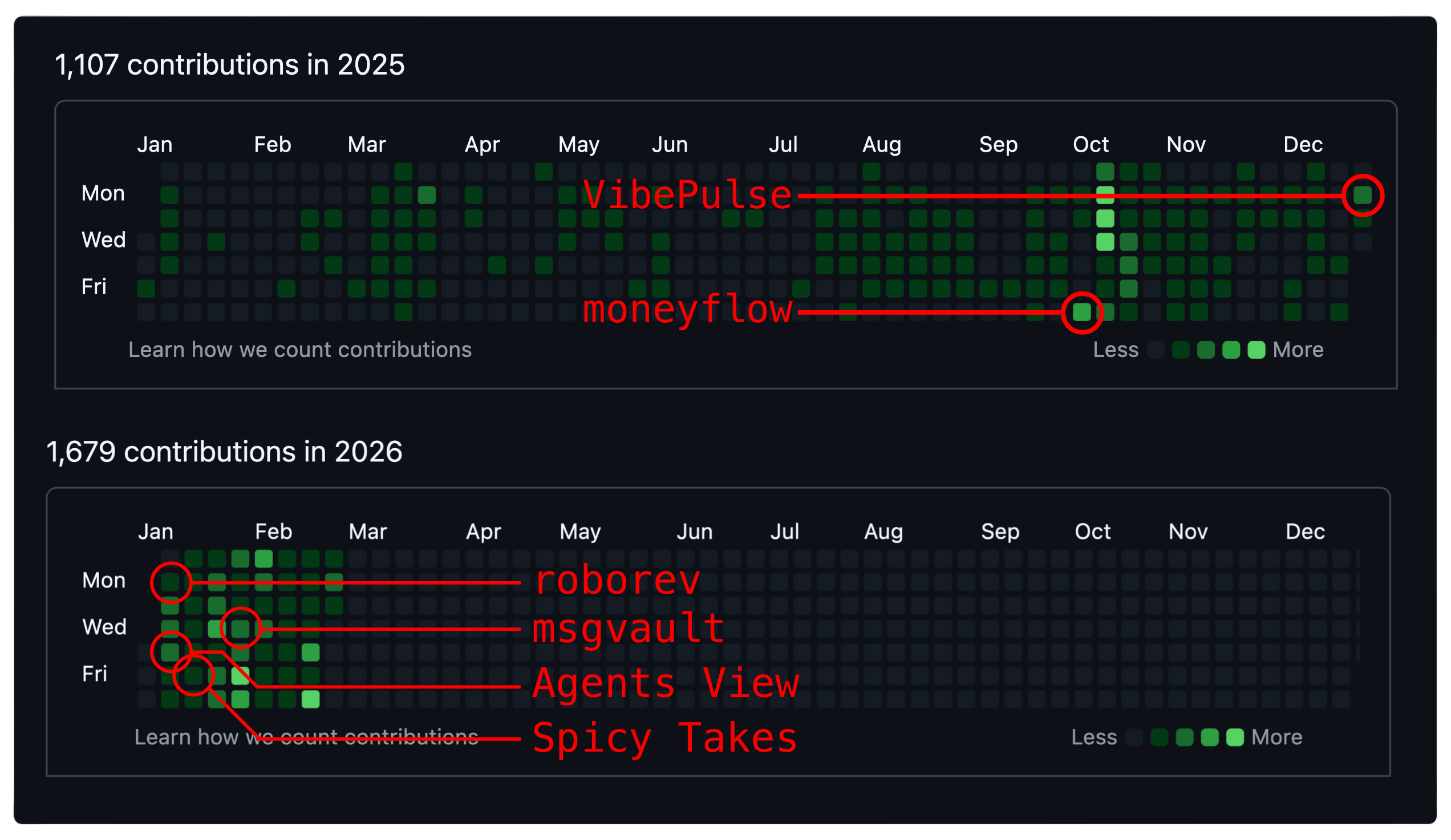
In this post, I’ll walk through Wes’s:
- embrace of AI coding agents
- five projects he shipped in rapid succession
- usage of previously unfamiliar-to-him languages
and share three lessons I’ve taken away for my own work.
An Astonishing Pace
Wes has been quite open about his methods, sharing his approach through blog posts and on LinkedIn. He runs $200/month plans from both OpenAI and Anthropic, and he uses the Codex plan almost exclusively for code review and planning. This lets him keep multiple AI coding agents working in parallel: while one agent is occupied with a task in one project, he can direct another to begin work on something else entirely. The result is a continuous pipeline of productive output, where the bottleneck is no longer the speed at which code can be written, but rather the speed at which Wes can conceive of, direct, and review the work being done.
As Wes wrote recently, he’s “working harder and having more fun building than I have in years”. The pace of commits, releases, and new project announcements bears that out. Let’s take a closer look at what he has actually shipped…
First Steps: moneyflow for Personal Finance in the Terminal
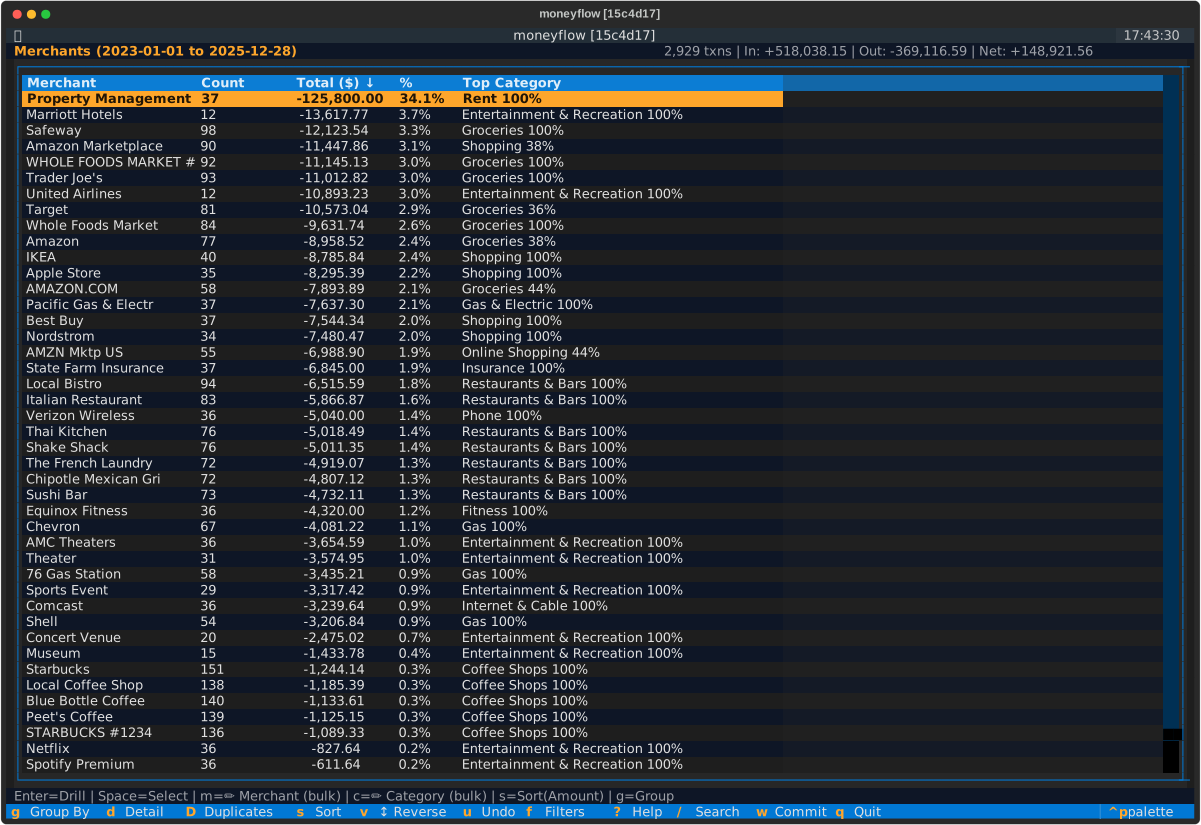
moneyflow (GitHub) is a terminal-based personal finance tool written in Python that supports platforms like Monarch Money, YNAB, and Amazon purchase history. It is designed for people who prefer keyboard-driven workflows and need to process large numbers of transactions quickly. It uses Polars for fast local data operations and provides drill-down analytics by merchant, category, or time period. All filtering, searching, and aggregation happen locally, with no API latency after the initial data download. It’s a tool that seems to scratch a very particular itch and the sort of thing that a certain class of technically-minded person has always wished existed. Wes simply went ahead and built it.
While moneyflow was a tool created using AI, Wes’s next three tools appear to be aimed at improving his process of coding with AI: essentially building the ship while sailing it.
Agents View: Making Sense of the Conversation Trail
As anyone who works extensively with AI coding agents knows, the sessions pile up with great speed, and finding that one conversation where a particular problem was solved or a specific approach was discussed can be super frustrating.
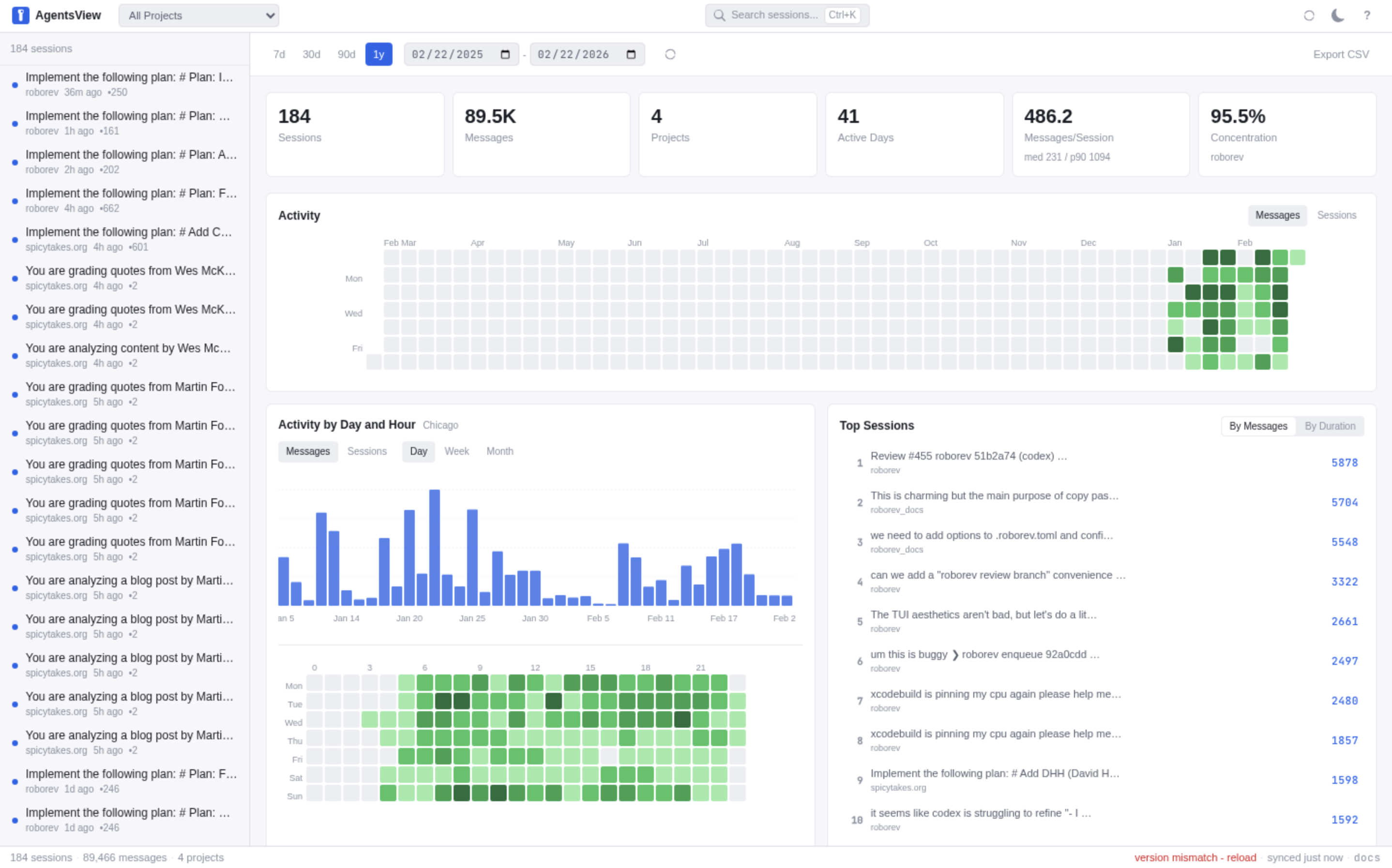
Agents View (GitHub) addresses this directly. It’s a local web app (now rewritten in Go as a single binary) for browsing, searching, and revisiting sessions from Claude Code, Codex, and Gemini CLI. It features full-text search across all message content, live sync as active sessions progress, activity heatmaps and usage analytics, and the ability to export sessions for sharing. Everything runs locally with a SQLite database and an embedded Svelte frontend, so nothing leaves your machine.
With the session logs under control, the next natural question was: how much is all of this costing?
VibePulse (Watching the Token Meter)
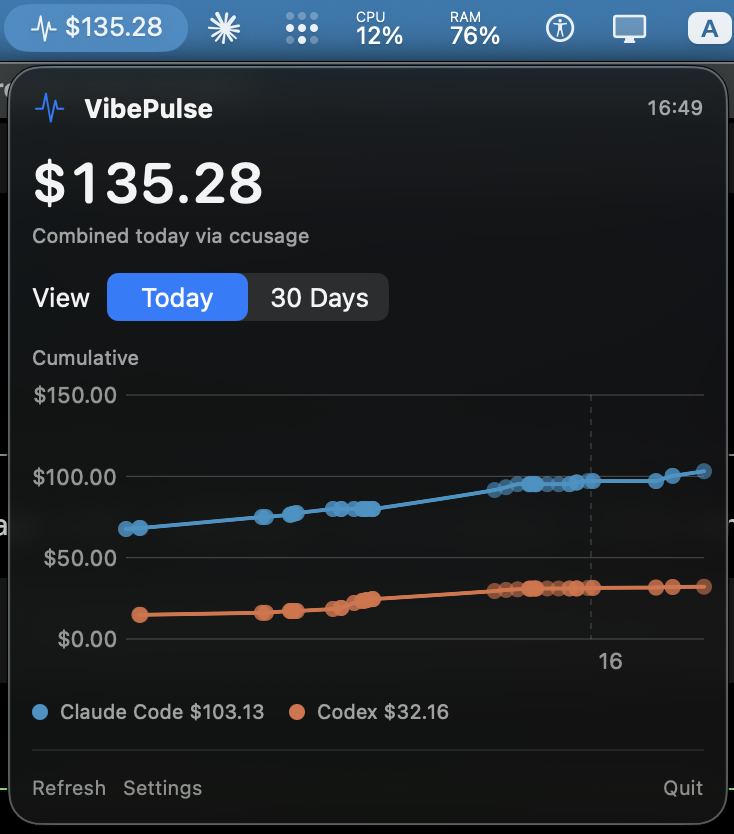
VibePulse is a macOS menu bar application (written in Swift) that monitors Claude Code and Codex token consumption. It provides a daily cumulative spend view and a 30-day view with per-tool breakdowns, helping heavy users of AI coding agents keep an eye on how much computational resources they are actually consuming. It is a small but practical utility, a thing you build when using these tools so intensively that tracking the usage itself becomes very necessary.
With visibility into sessions and spend, the remaining bottleneck was code quality: reviewing the ever-growing stream of agent-generated commits.
roborev, Continuous Code Review for Agents
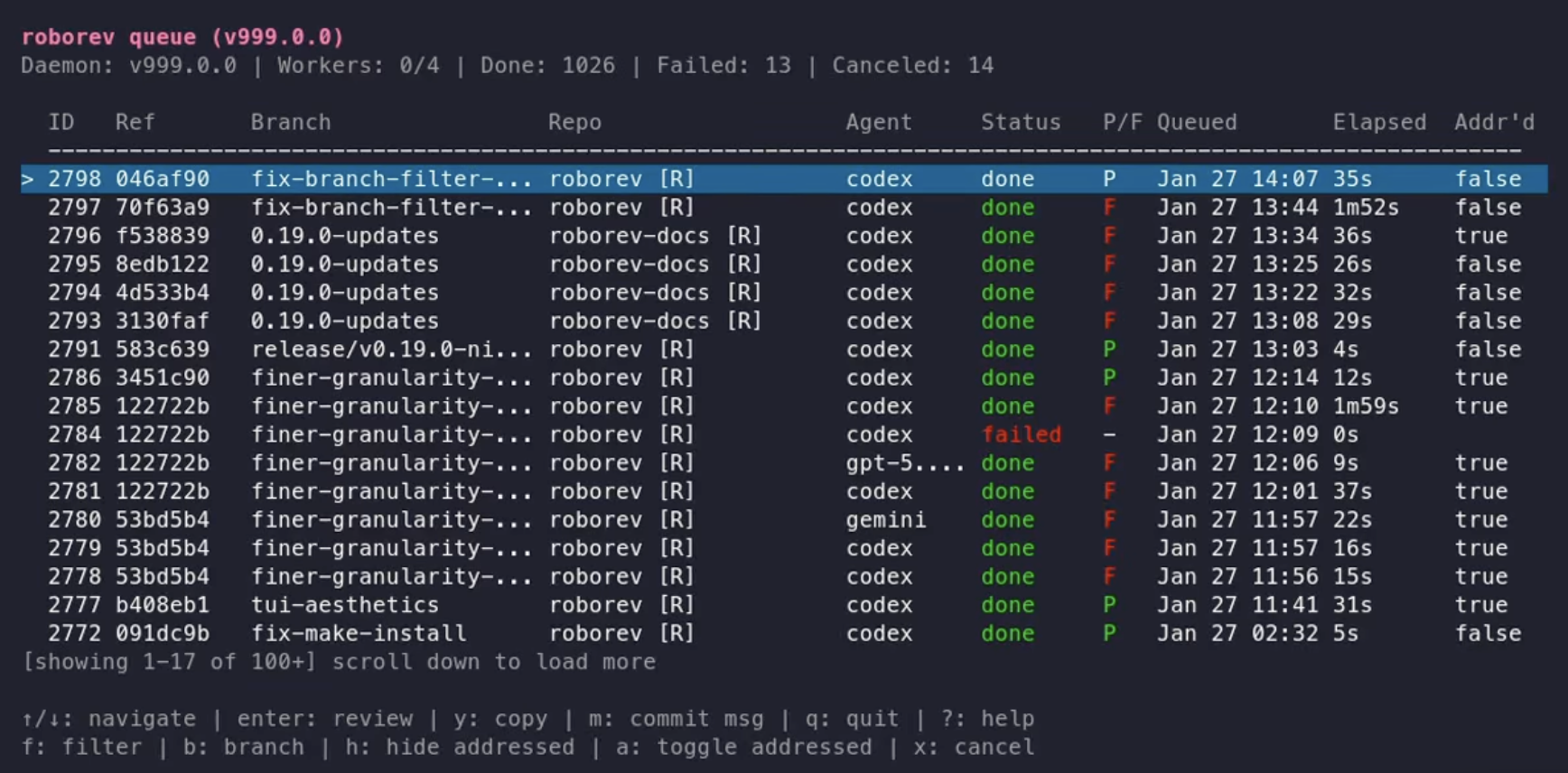
Perhaps the biggest of his recent projects is roborev (GitHub), a continuous background code review system written in Go. The premise is elegantly simple and addresses a real problem in the emerging world of agentic software development. AI coding agents write code quickly, but they make mistakes. Under the old workflow, the review of that code would come far too late to be useful, often after the agent had already moved on to the next task, and the relevant context was lost.
roborev solves this by reviewing every commit as it happens. It installs as a post-commit hook, runs reviews in the background, and surfaces issues in seconds rather than hours. It comes with an interactive terminal interface, supports multiple agents, including Codex, Claude Code, Gemini, Copilot, and others, and can even automatically fix the issues it finds through its roborev fix and roborev refine commands. The project has already reached version 0.26.0 with 55 releases, and it has attracted an engaged community of contributors. Wes himself has said that roborev has “totally transformed” his productivity. And you can easily see why, as it closes the feedback loop on agent-generated code to something approaching real time.
With the full productivity stack in place (session viewer, token monitor, code reviewer), Wes had essentially fired up the full machine. His final project marks a full embrace of the agentic coding in Go lifestyle. (For more, see his post on agent ergonomics.)
msgvault: Archive a Lifetime of Email
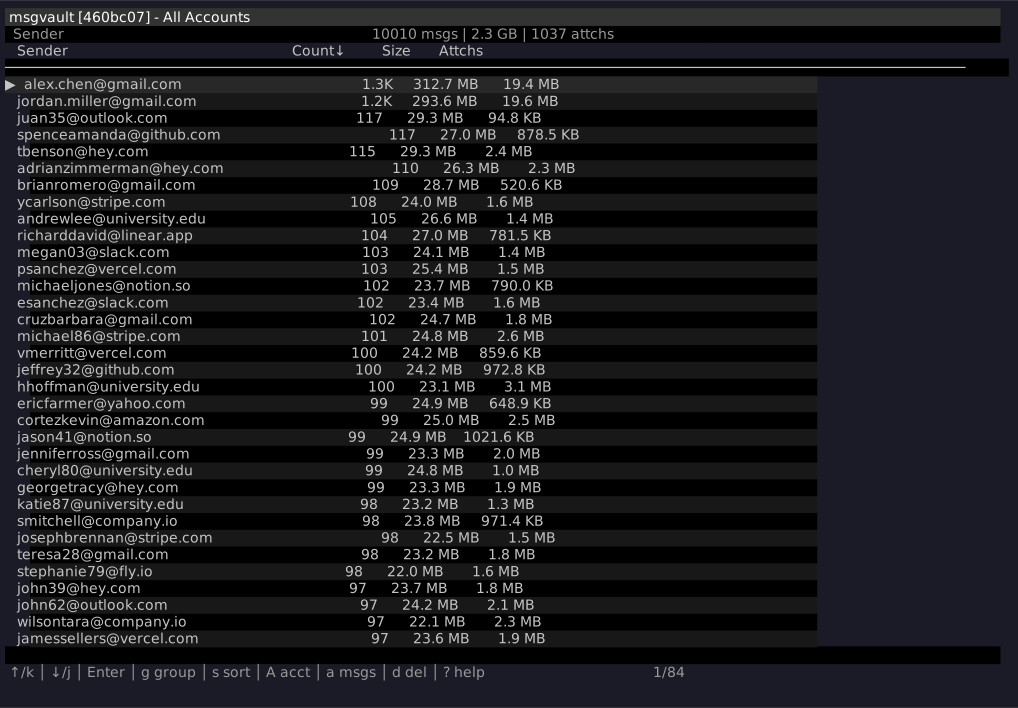
msgvault (GitHub) is a tool for archiving and searching a lifetime of email and chat messages, written in Go and powered by DuckDB for fast analytics over Parquet files. It performs a full Gmail backup, including raw MIME data, attachments, labels, and metadata, and then provides a rich interactive terminal interface for exploring the archive. It features full-text search with Gmail-like query syntax, incremental sync via the Gmail History API, multi-account support, and content-addressed attachment deduplication. Perhaps most notably, it includes an MCP server so that AI assistants can search and analyze your full message history conversationally. The project has already gathered over a thousand stars on GitHub and has a growing community on Discord.
What Stands Out
A few things about Wes’s approach are worth highlighting. First, he’s fearless about working in unfamiliar languages. His career was built on Python, but most of these projects are in Go, Swift, and Rust. He chose Go for roborev and msgvault not because he knew it, but because it produces distributable static binaries, builds fast, and performs well. AI agents bridged the gap between his intent and the implementation.
Second, he’s optimized everything around the agentic workflow (fast compile-and-test cycles, self-contained binaries, and automated code review on every commit). Minimizing friction in that loop matters a lot when agents are compiling and testing far more frequently than any person would.
And third, this was all done on nights and weekends and was driven by enthusiasm. These are practical tools that solve real problems, produced by a single person working alongside AI agents over just a few months.
My Takeaways
Watching Wes’s journey over these past few months has genuinely changed how I think about my own work. Here’s what I’m carrying forward:
Leverage AI Agents: Individual engineers with the right combination of experience, taste, and ambition can now accomplish what once required entire teams. AI coding agents provide real leverage, especially for those with a clear vision and strong engineering judgment.
Just Build: If you have an idea for a tool that would make your life or others’ lives better, the barriers to building it have never been lower. Don’t let unfamiliar languages or ambitious scope stop you. Meaningful progress is possible even in off-hours.
Share Your Methods: Wes’s openness in sharing his methods and insights is a model for the community. Experience, paired with powerful new tools, can unlock remarkable productivity and creativity.
As someone who maintains open source packages for a living, I’ve already started applying these lessons! I’m leaning on agents more, I worry a bit less about whether I know a language before reaching for it, and I’ve been building small tools I’d previously only daydreamed about. If Wes’s example is any indication, the best reason to start is that it’s just super fun.
Late Addition: Spicy Takes
Just as this post was wrapping up, Wes reminded me about Spicy Takes (GitHub), a project he’s poured a tremendous number of tokens into and one that gives him a lot of joy.
Spicy Takes is a multi-blog archive and analysis platform built on a simple premise: people are too busy to read blog posts. Starting from that observation, Wes built a system that scrapes posts from notable technical writers, runs them through an LLM pipeline to extract summaries, key quotes, and theme tags, and then assigns each quote a “spiciness” score from 1 to 10 based on how provocative it is. The site now covers 33 blogs with over 11,000 posts and 62,000 quotes.
Spicy Takes is a perfect example of the pattern running through all of Wes’s recent work, which is to: (1) start with a problem you personally have, (2) use AI agents to build the solution fast, and (3) then discover that other people want it too.

Rich Iannone
Related Content

2026 Posit Impact Awards

Score a Disease Surveillance Model Inside Snowflake, Without Moving
